Anna Stepanova
Associate Professor of Plant and Microbial Biology
Ph.D., University of Pennsylvania
Postdoctoral, North Carolina State University

Jose M Alonso
William Neal Reynolds Distinguished Professor of Plant and Microbial Biology
Ph.D., Universitat de Valencia, Spain
Postdoctoral, the University of Pennsylvania and The Salk Institute
General interests
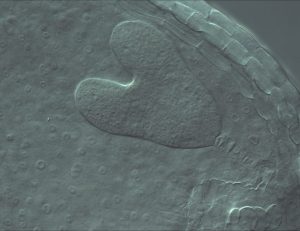
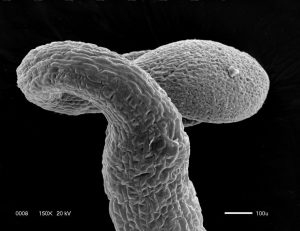
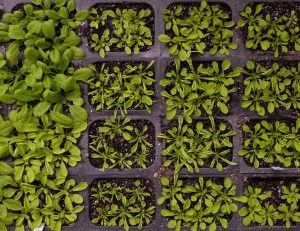
Our main interest is to understand the molecular circuits plants use to integrate environmental and developmental signals to produce specific responses. Towards this general goal, we have been focusing on the identification of the molecular “signal integrators” or “logic gates” involved in the interaction between two plant hormones, ethylene, and auxin, in the regulation of root growth. Using a multidisciplinary approach (genetics, molecular biology, genomics, metabolomics, cell biology, etc.), we have uncovered a complex multistep integration process with both spatial and temporal components. Our research has shown that ethylene activates the transcription of auxin biosynthetic genes in the root meristem (root tip) and then auxin is transported upwards to where it sensitizes the cells in the division zone enabling them to properly respond to ethylene. Our more recent findings suggest that translation regulation represents a key aspect of this “sensitization” mechanism triggered by auxin. In parallel, these studies have allowed us to decipher the first complete auxin biosynthetic pathway in plants and we continue to investigate the role of auxin biosynthesis in development. Finally, we combine our interests in basic biology with the development and implementation of new genetic technologies to accelerate discoveries in plant biology. Currently, we are working on several areas: gene modification in a chromosomal context using recombineering approaches, high-resolution whole-genome analysis of translation using next-generation-sequencing (NGS) enabled ribosome footprinting, the implementation of synthetic biology approaches to generate transcriptional reporters for plant hormones, the generation of CRISPR-Cas9 based logic gates and the development of high throughput morphodynamics tools to link genotype and temporal dynamics of plant growth.
Outreach
Our Plants4Kids outreach activity is targeted at school-age kids (2nd to 5th grade) and has been running since 2011. This is a bilingual (English and Spanish) web-based science dissemination program that consists of a set of 14 experimental modules in plant biology designed specifically for kids. Each experimental module is divided into six sections: the question that will be addressed in the experiment, the materials that will be needed, the directions on how to perform the experiment, helpful suggestions, expected results, and follow-up questions. By providing step-by-step bilingual directions for performing easy and inexpensive (and, most of the time, free) experiments, we hope to include children coming from low-income families that often have very limited resources and/or poor English language skills. To promote our outreach program, every second Saturday of the month we run a hands-on booth at the North Carolina Museum of Natural Sciences, as well as occasional demos at local elementary schools. Since the inception of Plants4Kids in 2011, our program has reached thousands of kids over the course of over 100 live demos (ranging in duration from 2 to 8 hours each). The goal of these activities is to stimulate interest in science among young people and to make basic science accessible to the underrepresented Hispanic community.
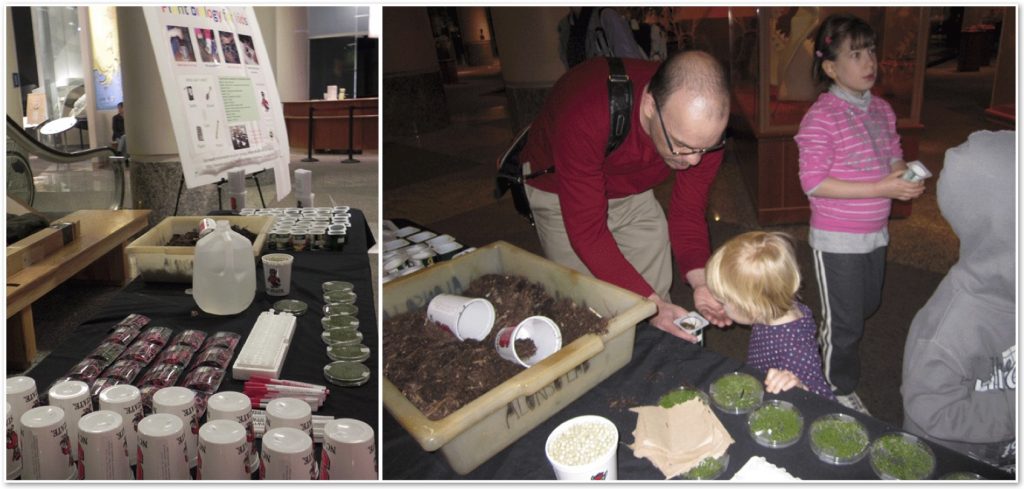
Encouraged by the success of our Plants4Kids we have now started a new outreach activity targeted to older kids, Plants4Teens. The main goal of this outreach activity is to promote interest among middle- and high-school-age students in combining biology, computers, and engineering. We are trying to achieve this by means of simple animated videos that explain basic concepts in biology and its interface with other disciplines.